SKILLS: Information Architecture, Responsive Design, Prototyping
⋆。°✩ MARKET LANDSCAPE ✩°。⋆
01
CHATGPT
Where students actually go. Off-platform, no class context, no instructor policy visibility, no academic integrity guardrails.
02
U-M GPT
Hidden in U-M's toolkit. Powerful but disconnected from any specific course. Many students don't know it exists or what it can do.
03
MAIZEY
Maizey supports course-specific AI, but discovery and access still depend on individual course setup and visibility.
Gap: Students don't see AI as part of their class. They see it as something separate they have to find and set up.
02 / PROBLEM
FRAMING
01
"where do I even go?"
02
"is this even allowed?"
03
04
"what does it know about me?"
KEY INSIGHT
03 / IDEATION
CRAZY 8s + TASK FLOW
BEFORE
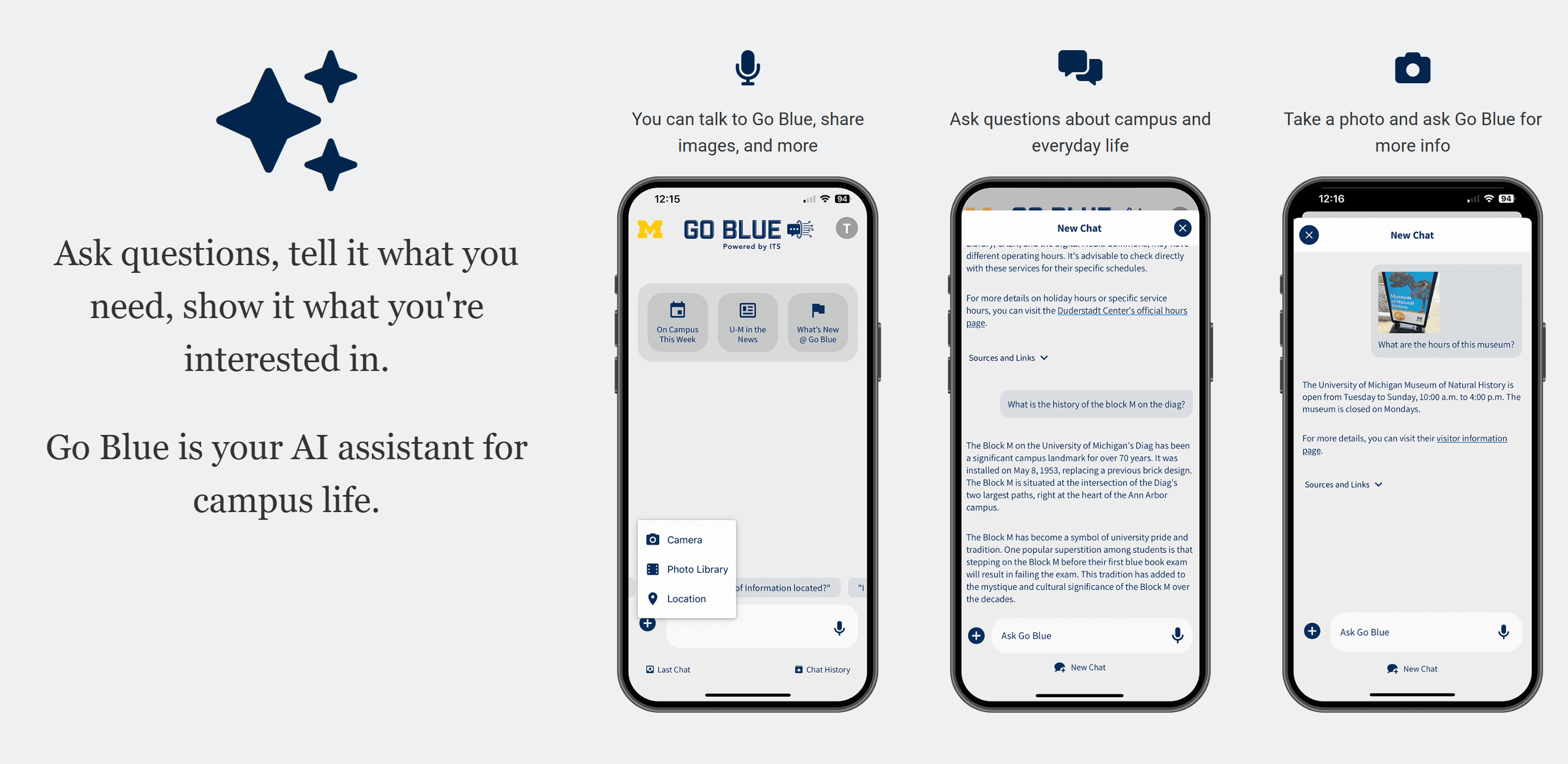
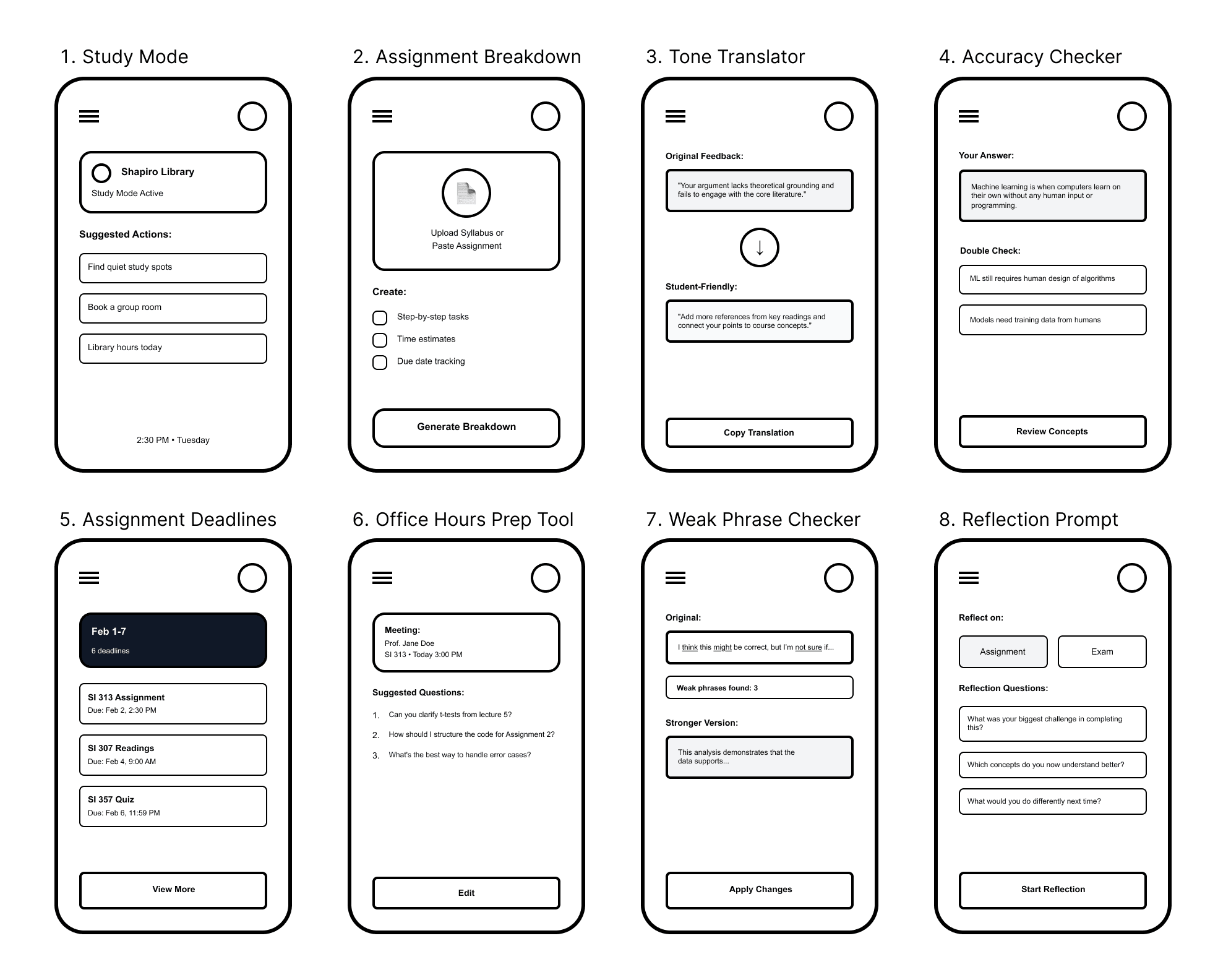
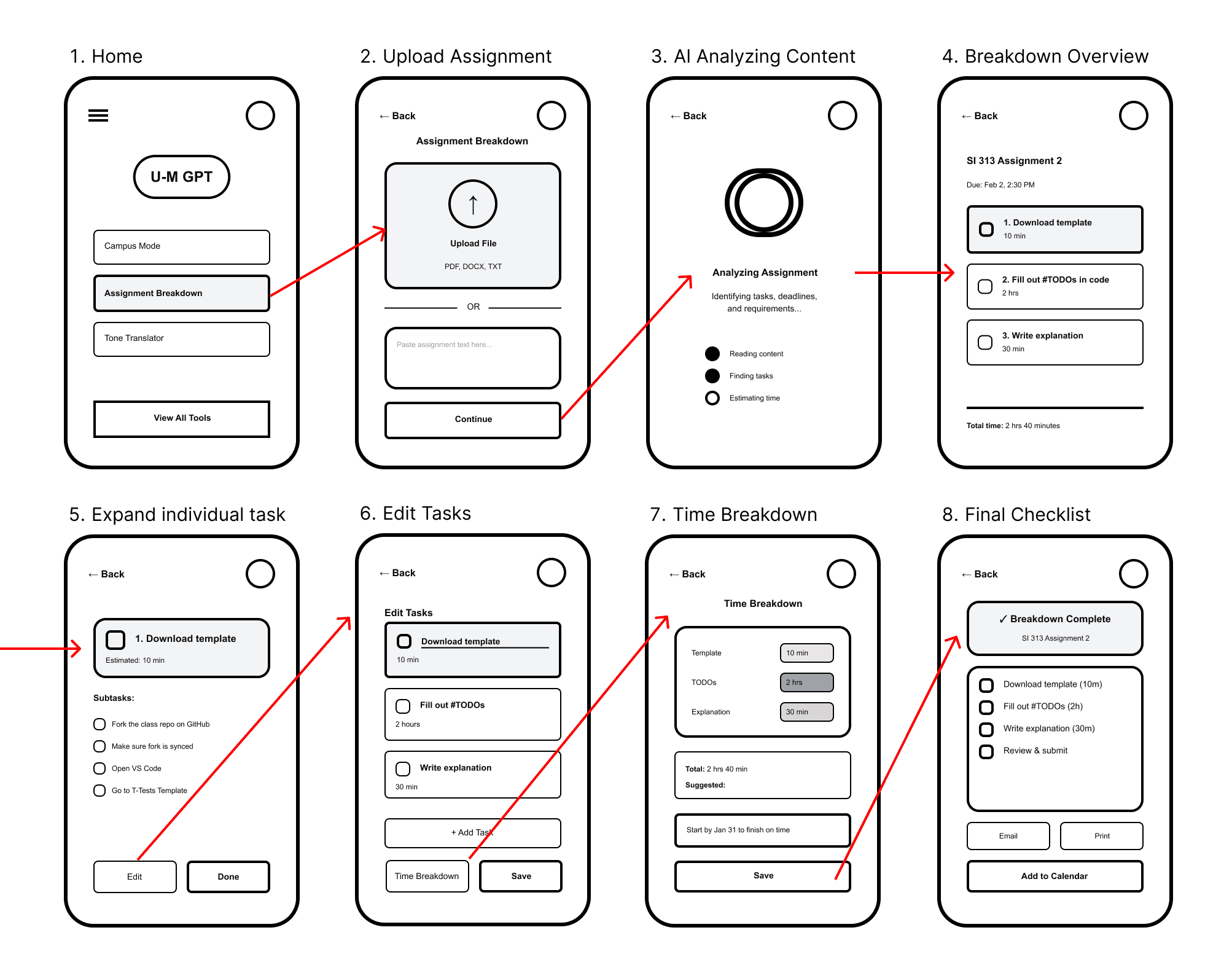
⋆。°✩ LOW FIDELITY WIREFRAME ✩°。⋆
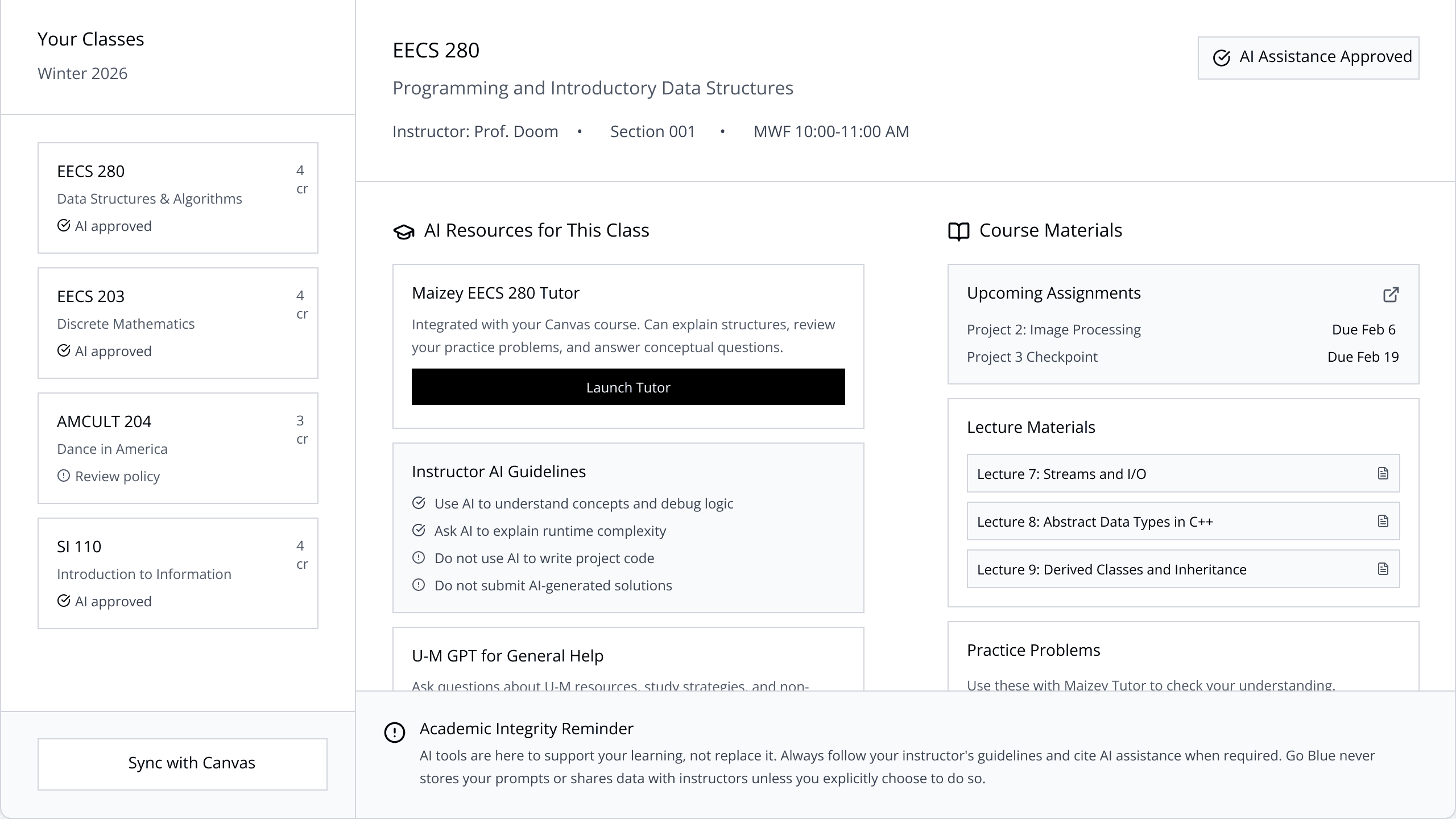
FIRST ITERATION OF HOME PAGE
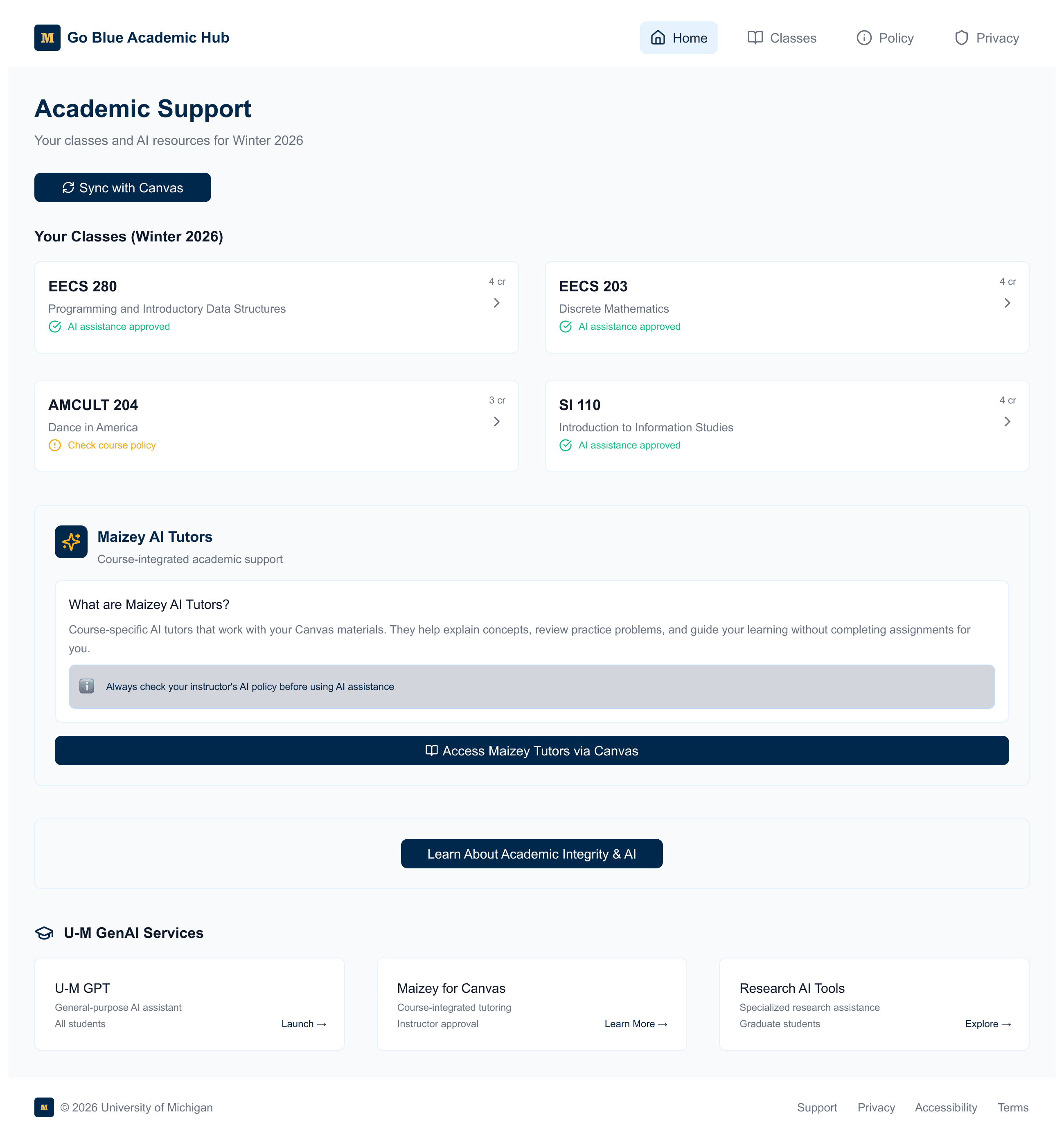
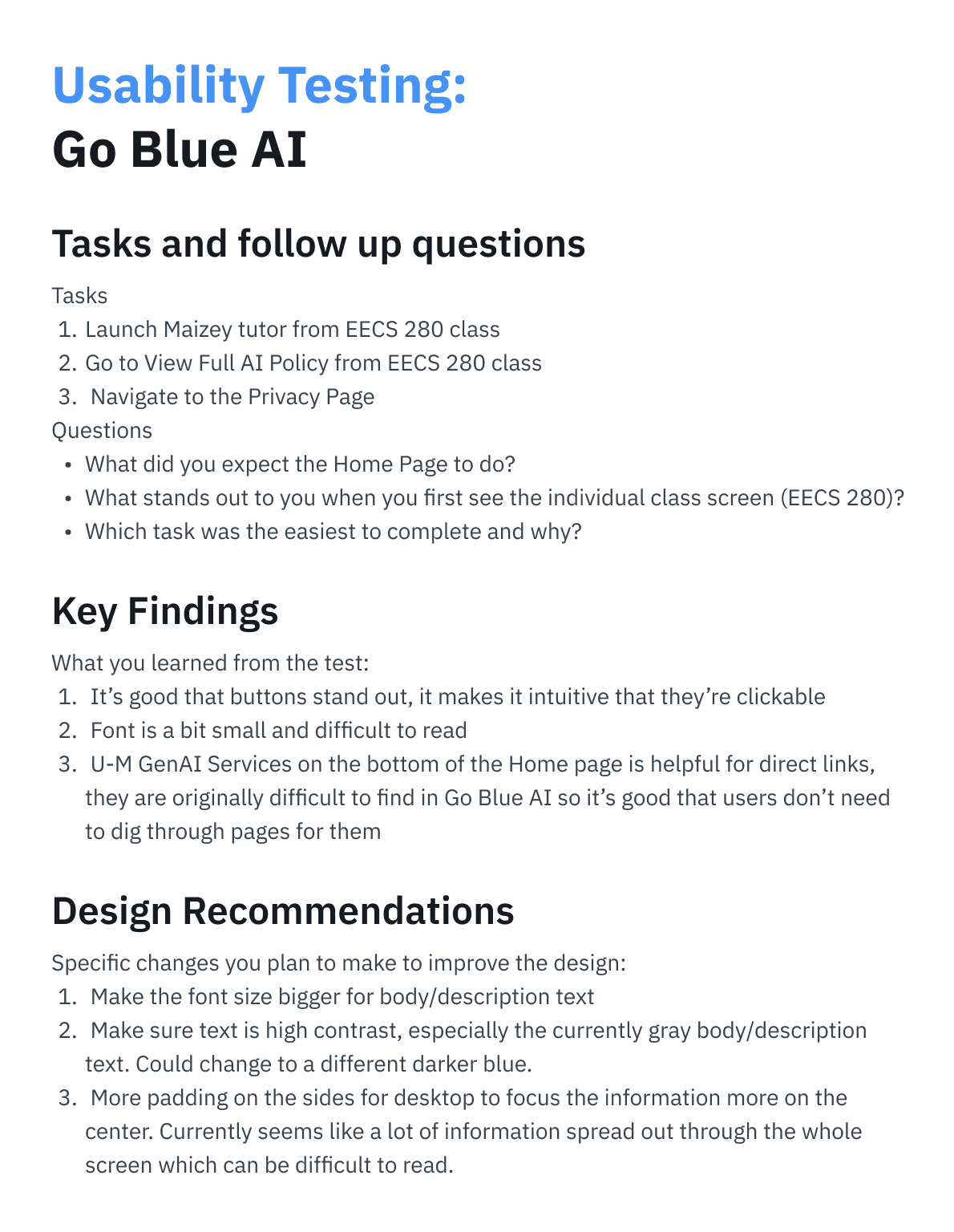
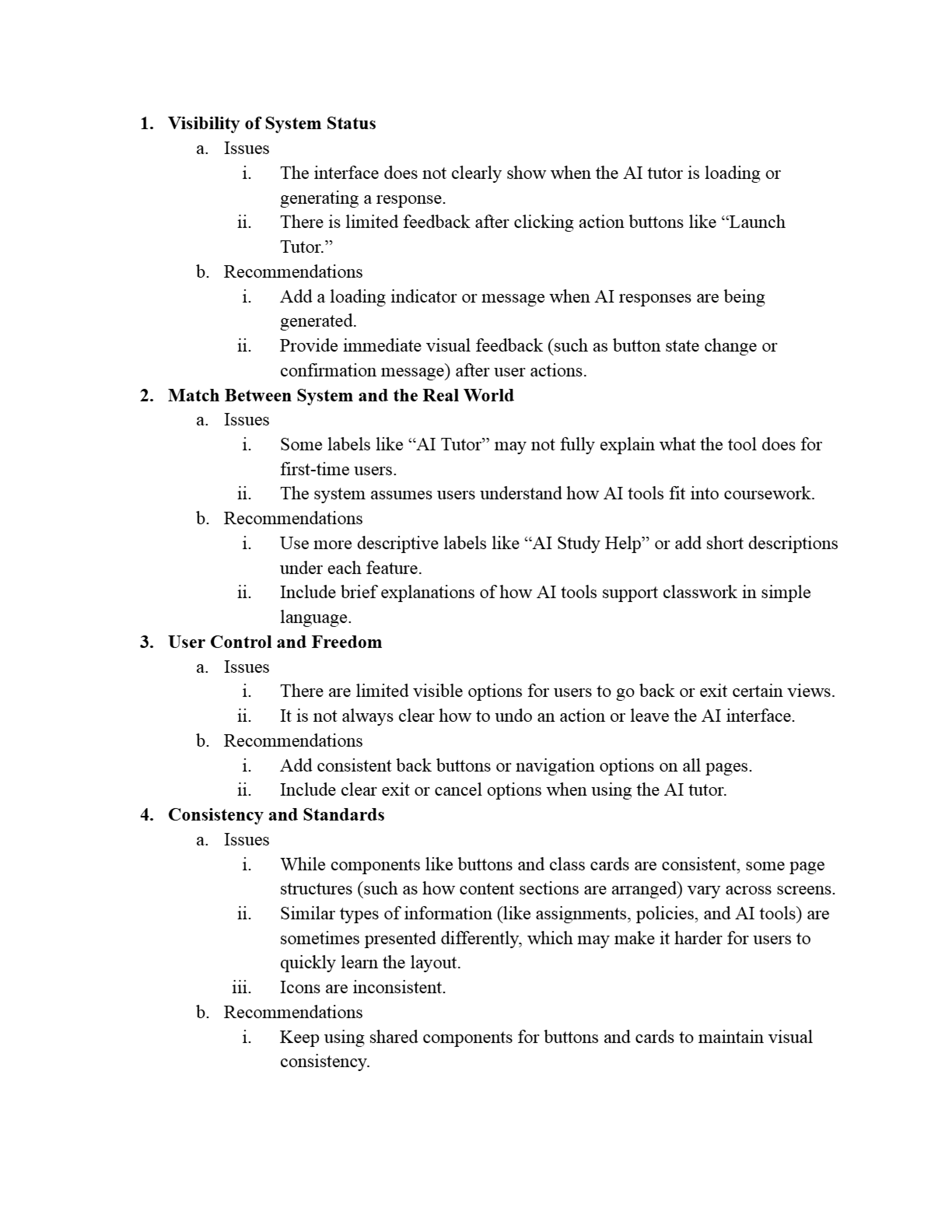
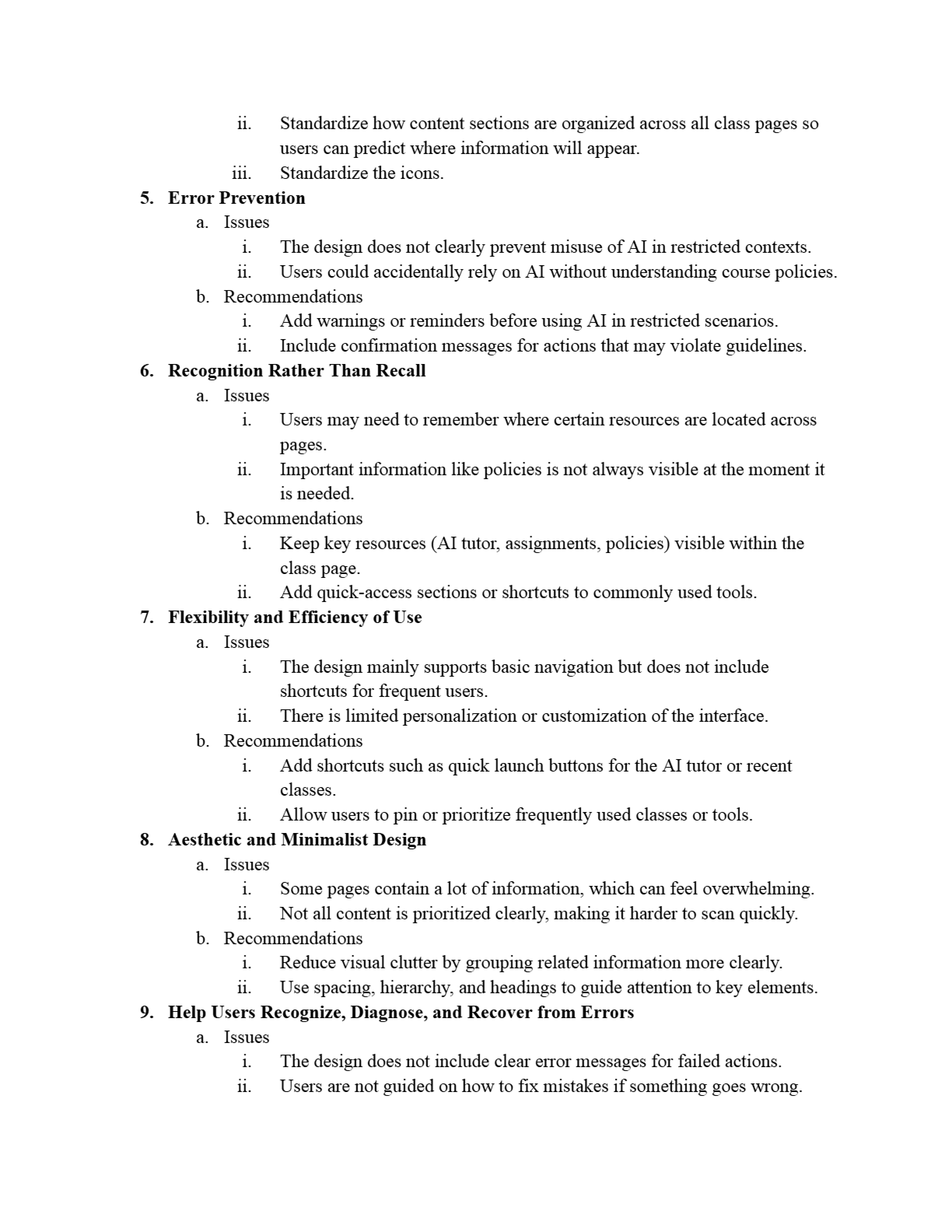
05 / FINAL PRODUCT
DESKTOP + MOBILE
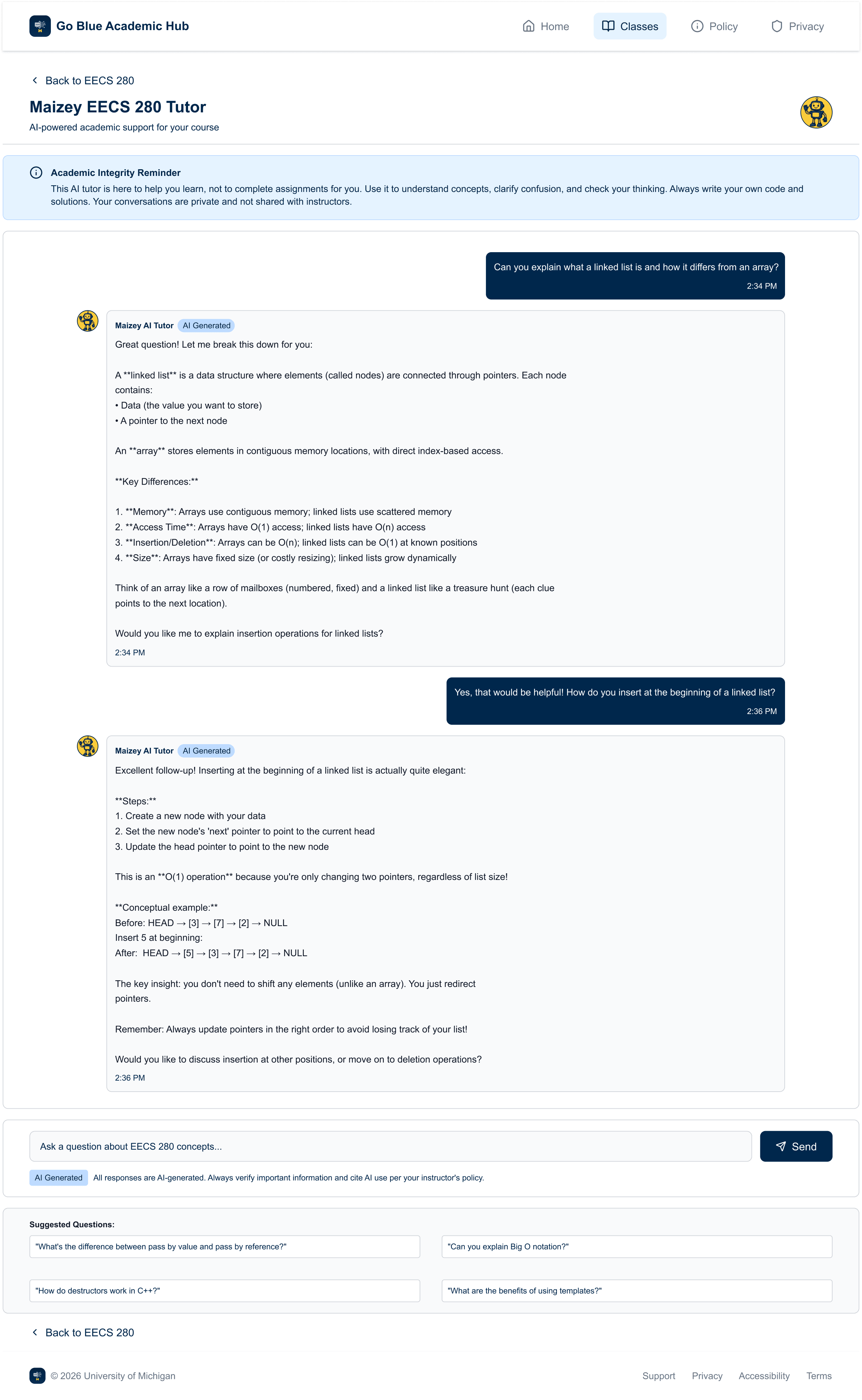
⋆。°✩ AI TUTOR PAGE ✩°。⋆
TRUST BY DESIGN: DECISIONS I MADE
01
ACADEMIC INTEGRITY REMINDER
A blue callout at the top of every session addressing the question students worry about before they even start typing. Is this even allowed?
02
AI GENERATED TAGS
Every response is labeled so students never lose track of which thinking is theirs and which came from the model.
03
COURSE-SCOPED TUTOR IDENTITY
The tutor is named after the course instead of being a generic AI. That anchors it inside the class, rather than feeling like another ChatGPT students have to go find on their own.
04
SUGGESTED QUESTIONS
Lowering the friction of the first message matters more than it sounds. An empty input box is its own trust barrier.
05
CITATION REMINDER AT INPUT
A small line below the input field nudges students to cite AI use right when they're using it, not as a checklist item after the fact.
06
POLICY TAB IN NAV
A dedicated home for course-specific AI rules. Professors set context here. Students check it before they ask.
⋆。°✩ MOBILE PROTOTYPE ✩°。⋆
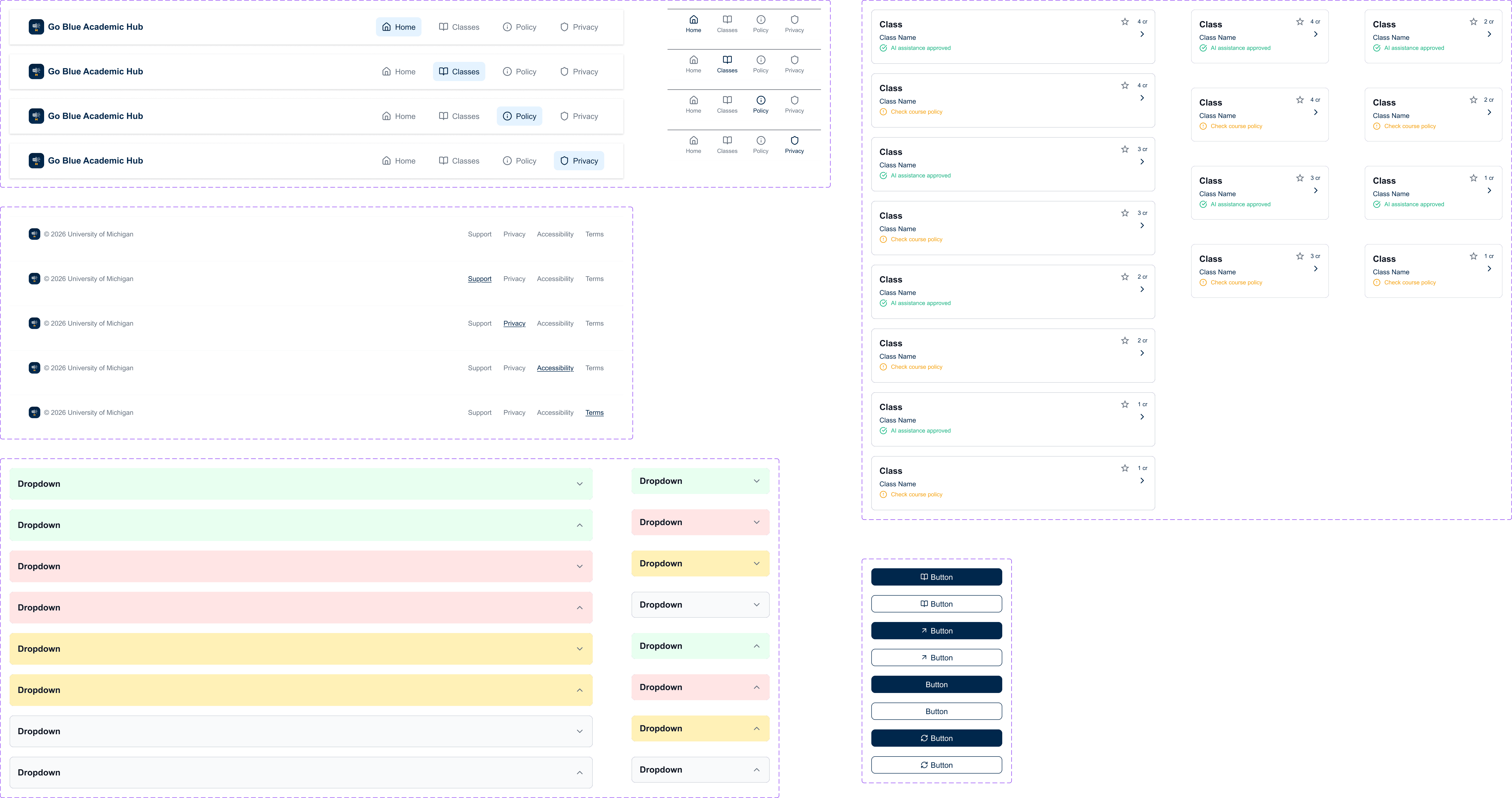
⋆。°✩ COMPONENTS I MADE ✩°。⋆
I built and reused buttons, navbars, class cards, dropdowns, and footers across the redesign.
06 / KEY DECISIONS
REDESIGN
07 / TAKEAWAYS
ROLE + LEARNINGS
MY ROLE ⋆。°✩
✩ Solo end-to-end: research, ideation, IA, prototyping, visual design
✩ Reframed U-M's open brief around a trust thesis: "How do you design a campus AI students will actually trust?"
✩ Identified four trust gaps from problem framing (Scattered, Unclear, Disconnected, Opaque) and designed surfaces addressing each
✩ Designed AI-specific patterns including academic integrity callouts, course-scoped tutor identity, AI-generated transparency tags, and suggested-question scaffolding
✩ Built desktop + mobile flows + interactive prototype in Figma
REFLECTION ⋆。°✩
✩ For AI tools, trust comes from transparency, not capability. Every surface I designed (academic integrity reminder, course-scoped tutor identity, AI-generated tags, citation patterns) reinforces this✩ Final product diverged sharply from initial sketches, and that was the point✩ Research-driven scope beats feature-driven scope every time✩ Constraints clarify the product more than features do✩ Anchoring to existing mental models outperformed other ideas I sketched